The envelope looks ordinary. The number inside often does not. Same car. Same commute. Same clean-enough record. The renewal still wants more for the privilege of not changing anything.
Premiums are priced locally. Two households with a similar car can see different numbers a few ZIP codes apart. The habit that matters is ordinary: many households do not shop the policy until a renewal feels higher than expected.
A comparison form does not print a new bill by itself. Some shoppers see a lower estimate. Some see a higher one once collision, glass, and extra drivers are added back in. The useful move is to put your ZIP next to the declarations page you already have.
Check a ZIP against this year’s quotes
State is used only to open the comparison form. Confirm every number on that site before you switch.
Detecting a starting state…
What a comparison actually places side by side
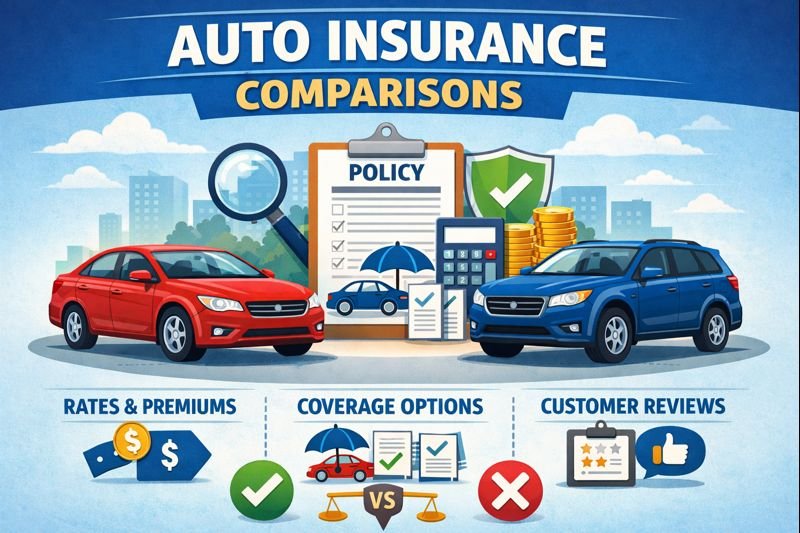
The graphic below is a layout sketch only. It does not show real premiums, averages, or a result you should expect.
There is no dollar amount on this page that is your quote. Terms apply on the marketplace.
What this desk is not claiming
This page does not have a file of verified customer savings. Composite notes in the sidebar are writing devices for the advertorial. They are not reviews and not proof that a ZIP check lowers a bill.
How the next page works
Choose your state and ZIP. That is the only location data this page sends into the offer link.
On the marketplace, answer the driving questions. Compare the return against the declarations page you already have — limits first, price second.
If you switch, unused premium and any cancellation fee are set by the carrier and by state rules. Read the cancellation page before you drop a policy that is still in force. Do not cancel until a replacement is bound, if you choose to switch at all.